J. Cliff McKinney II
Practice Areas
Bio
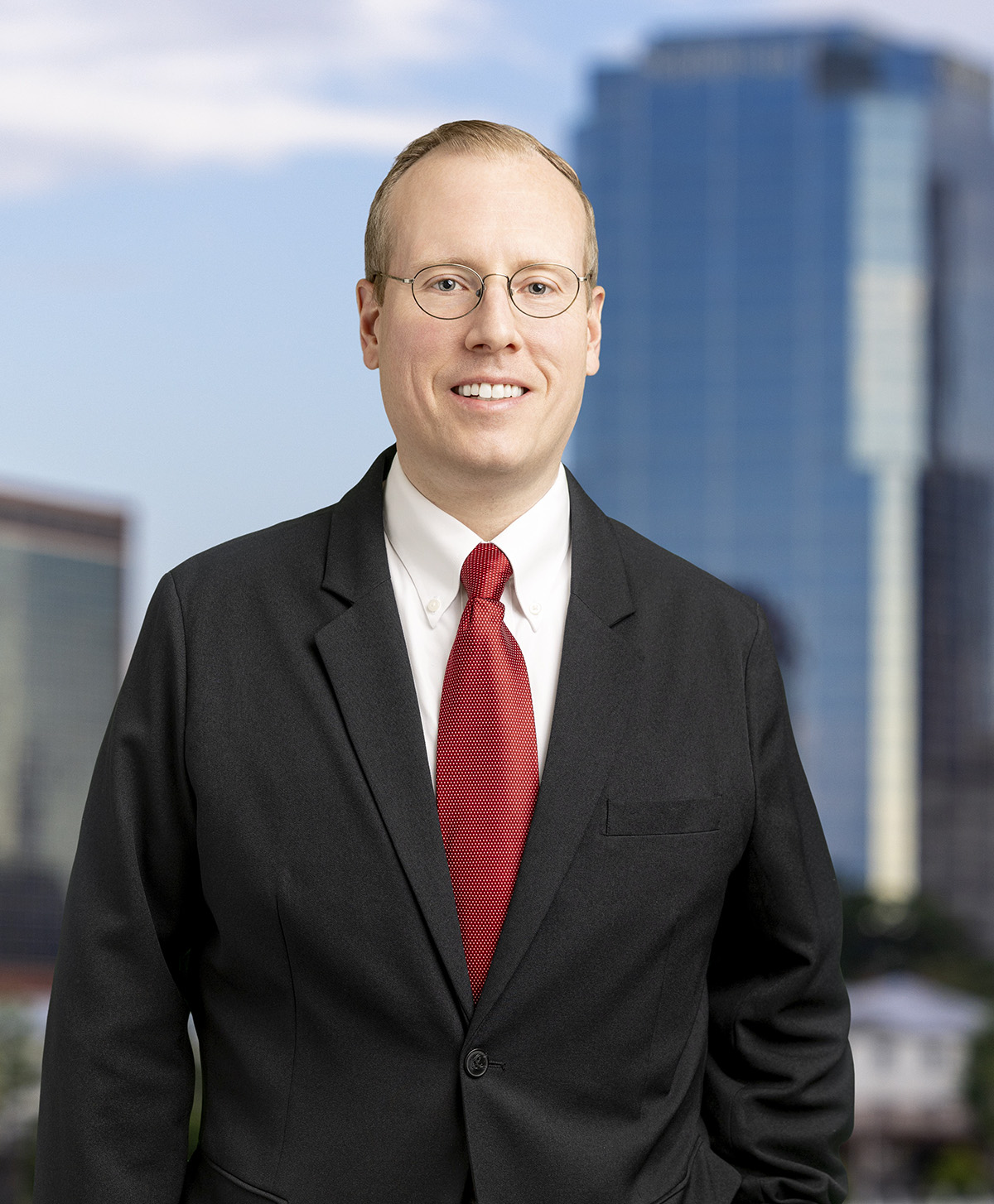
J. Cliff McKinney II is a nationally recognized commercial real estate attorney and transactional lawyer who represents institutional lenders, developers, and investors in complex real estate and finance transactions across Arkansas, the mid-South, and nationally. As a managing member of Quattlebaum, Grooms & Tull PLLC, his practice focuses on acquisitions, development projects, commercial leasing, and structured financing matters where size, complexity, and risk demand experienced judgment and precise execution. He also advises clients and organizations on the use of artificial intelligence in transactional legal practice.
Cliff is widely regarded as a leading real estate attorney in Arkansas and the region, representing Fortune 500 companies, financial institutions, developers, and high-net-worth investors in significant commercial real estate transactions. His work routinely involves complex, large-scale transactions requiring coordination across legal, business, and regulatory considerations. His experience includes representing capital providers in construction and permanent financing, negotiating commercial leases for major retail and mixed-use developments, and resolving title, survey, and land use issues that directly impact deal feasibility and risk allocation.
His practice spans the full lifecycle of commercial real estate transactions, including acquisition, development, leasing, and disposition of office, retail, industrial, mixed-use, and agricultural properties. He regularly advises on complex title matters, including easement relocations, restrictive covenant modifications, boundary disputes, and risk mitigation strategies necessary to close high-stakes transactions.
Cliff’s real estate practice is further strengthened by his national leadership in law reform. He serves as a Commissioner with the Uniform Law Commission, where he holds senior leadership roles, including Chair of the Legislative Council and Chair of the Drafting Committee on Deed Fraud. Through this work, he helps shape uniform laws governing real estate and commercial transactions across multiple jurisdictions, providing a national perspective on emerging legal and regulatory issues affecting the real estate industry.
In addition to his transactional practice, Cliff has developed a nationally recognized body of work focused on the use of artificial intelligence in transactional law. His work centers on how experienced lawyers can responsibly integrate generative artificial intelligence into drafting, diligence, negotiation, and deal execution while maintaining professional responsibility and protecting client interests. He is the author of a multi-part series on artificial intelligence and prompt engineering for lawyers published by the University of Arkansas and regularly writes on the intersection of artificial intelligence and commercial transactions. His work is particularly focused on the practical use of artificial intelligence for transactional lawyers in real estate and finance contexts.
Building on this work, Cliff is a frequent national speaker on artificial intelligence in legal practice, presenting for organizations such as the American College of Real Estate Lawyers, the American College of Mortgage Attorneys, and the American Bar Association. His presentations focus on practical applications of artificial intelligence in real estate and finance transactions, as well as the ethical and professional responsibilities associated with these tools, often incorporating live demonstrations and real-world transactional examples.
He has served as an adjunct professor at the University of Arkansas at Little Rock William H. Bowen School of Law since 2007, teaching Real Estate Finance and Real Estate Transactions, and has been appointed multiple times as a Special Associate Justice of the Arkansas Supreme Court.
Cliff is licensed to practice in Arkansas, Texas, Mississippi, Missouri, Oklahoma, and Tennessee. He is a Fellow of the American College of Real Estate Lawyers and the American College of Mortgage Attorneys and is consistently recognized by Chambers USA, Best Lawyers in America, and Super Lawyers for his work in real estate law.
Recognition
Chambers USA (2010-Present)
Best Lawyers in America® (2016-Present)
Super Lawyers (2008-Present)
Martindale-Hubbell AV Preeminent®
Associations and Affiliations
Fellow, American College of Real Estate Lawyers
Fellow, American College of Mortgage Attorneys
Arkansas Bar Association – Board of Trustees, Real Estate Law Section Chair
Commission on Uniform State Laws (2017-present)
ICSC
Christian Legal Society
Community
Arkansas Food Bank, Board of Directors, 2016-Present (President, 2026-Present)
Salvation Army, Central Arkansas Area Command, 2018-Present (President, 2020-2026)
Old State House Commission (2016-Present)
Arkansas Access to Justice Foundation Board, 2017-2026 (President, 2019-2026)
Habitat for Humanity of Central Arkansas Board of Directors, 2010-2020 (President, 2015-2018)
Education
Southern Methodist University (LL.M., emphasizing Real Estate Financing, 2003)
University of Arkansas School of Law (J.D., cum laude, 2002)
University of Arkansas (M.P.A., 2002)
Baylor University (B.A., 1999)
Publications (Partial List)
Chair, Standards for Examination of Real Estate Titles in Arkansas.
Prompt Engineering for Lawyers, Arkansas Law Notes (2026), Multi-Part Series:
- Blue Pill or Red Pill: Hallucinations Risks and an Introduction to Prompt Engineering
- How Deep the Rabbit Hole Goes: The Chunking Technique and Few Shot Prompting
- We Will Add Your Distinctiveness to Our Own: Iterative Refinement and Prompt Chaining
- Free Your Mind: Flipped Interactive Prompting and Perspective Switching
Ethics of Artificial Intelligence for Lawyers, Arkansas Law Notes (2026), Multi-Part Series:
- Shall We Play a Game? The Rise of Artificial Intelligence and the First Cases
- I’m Sorry Dave, I’m Afraid I Can’t Do That: Competence, Confidentiality, And Communication
- Resistance is Futile: Candor, Supervision, and Fees
- That Is the Sound of Inevitability: Legislatures and Regulators Step In
- You Will be Assimilated: Best Practices for Lawyers Using Artificial Intelligence
- Standalone Resource: Model Policy and Training Program for Responsible AI Use
Digging Up Bones: Archeological Compliance Issues in Retail Development, with Casey Rockwell, 46 Real Estate Law Journal 533 (2018).
With All My Worldly Goods I Thee Endow: The Law and Statistics of Dower and Curtesy in Arkansas, 38 U. Ark. Little Rock L. Rev. 353 (2016).
Justice in the Hinterlands: Arkansas as a Case Study of the Rural Lawyer Shortage and Evidence-Based Solutions to Alleviate It, with Lisa R. Pruitt and Bart Calhoun, 37 U. Ark. Little Rock L. Rev. 573 (2015).
Arkansas, in Implementing Institutional Controls at Brownfields and Other Contaminated Sites (American Bar Association Book 2012).
Caveat Who?: A Review of the Landlord/Tenant Relationship in the Context of Injuries and Maintenance Obligations, 35 U. Ark. Little Rock L. Rev. 1049 (2013).
Adverse Possession and Boundary by Acquiescence in Arkansas: Some Suggestions for Reform, with Prof. Lynn Foster, 33 U. Ark. Little Rock L. Rev. 199 (2011).
Deed Covenants of Title and the Preparation of Deeds: Theory, Law, and Practice in Arkansas, with Prof. Lynn Foster, 34 U. Ark. Little Rock L. Rev. 53 (2011).
Are You Trying to Imply Something?: Understanding the Various State Approaches to Implied Covenants of Continuous Operation in Commercial Leases, 31 U. Ark. Little Rock L. Rev. 427 (2009).
Factoring the Ambiguity: A Futile Attempt to Understand the Ambiguous Nature of the Integration Doctrine’s Five Factor Test, 31 Securities Regulation Law Journal 337 (2003).
Education
Southern Methodist University (LL.M., emphasizing Real Estate Financing, 2003)
University of Arkansas School of Law (J.D., cum laude, 2002)
University of Arkansas (M.P.A., 2002)
Baylor University (B.A., 1999)
Bar Admissions
Arkansas
Mississippi
Missouri
Oklahoma
Tennessee
Texas